NVIDIA X86

NVIDIA CPUI have mentioned several times that NVIDIA needs to enter the x86 market if it is to survive the next decade. Otherwise, it stands to be beat by Intel, AMD and even possibly VIA. However, the rumour mill today seems to confirm that NVIDIA is thinking along those very same lines.

The question is not so much, I think, if; I think the question is when. If you look at the high-end of the PC market I think it’s going to stay fairly discrete, because that seems to be the best of all worlds. We won’t talk much more about what we think about that timeframe, but there’s no question it’s on our minds.

NVIDIA obviously has the necessary resources to do it. It has swallowed up small x86 companies. However, the only nagging problem is that NVIDIA does not have a license to sell x86 chips. It is unlikely that Intel/AMD would allow them to do it quietly.

I still think that their best bet would be to buy up VIA or merge with them. At the very least, VIA has been happily selling x86 chips for years. Their x86 designs are famous for being extremely low-powered. However, VIA does not really need them as they have conquered their own little niche.

Alternatively, NVIDIA could think of doing a Transmeta. If their graphics processors are powerful enough as general purpose processors, they could emulate the x86 functionality entirely in software. With all the processing power at their disposal, this could be a viable alternative.

Then, all you would need to do is buy a NVIDIA graphics chip, which would be able to do graphics most of the time, and spend some of its time pretending to be an x86 processor. This may even skirt around the whole x86 licensing issue.

This would be a very interesting and elegant solution. I like.

Decimal Arithmetic

People generally count in decimal. However, there are some things in this world that don’t. I used to count in only decimal but these days, I tend to only use decimal for big numbers and actually count in hexadecimal for small numbers and binary for really small ones.

For me, it’s a job hazard. I know it may sound a little weird, but it’s true. If someone were to ask me to count stuff, I tend to count in binary for small numbers. If someone were to ask me what’s 3+9, the first number that pops into my head is ‘C’ (12 in hexadecimal).

I think that this is a by-product of designing too much computer stuff. People who work closely with computers soon realise that it is far easier to think in binary, octal or hexadecimal than it is to think in decimal. The reason is because computers do not work in decimal.

When I first started years ago, I used to do conversions between hexadecimal and decimal on a normal calculator as I did not have a scientific calculator. I only owned a scientific one after going to secondary school and began to use that to do my conversions instead. Today, I rarely do that anymore as I rarely deal with decimal numbers.

Anyway, this is just a random thought that I felt like sharing.

BSD Windows

FreeBSD mascotI had this short conversation with several people the other day, where I mentioned about Windows. I wondered why Microsoft has not decided to build the next version of Windows on the BSD kernel. Besides the sin of pride, I really couldn’t think of any technical reason not to.

BSD is a distribution of Unix created by UC Berkeley. Unix is an operating system developed in 1969. Through the years, it has evolved into an extremely secure and stable OS. People who use real computers (not toy computers) use variants of Unix. There is no technical reason why Microsoft cannot just use BSD and rid the whole world of numerous security problems. A company that has finally decided to do exactly that, after going their own way, is Apple. Just in case you didn’t know, Apple uses a BSD operating system. They then designed a ultra cool user interface on top of it. Microsoft could always copy Apple – they do it all the time anyway.

  1. Backwards Compatibility
    Some people may think that Microsoft needs to maintain backwards compatibility. Therefore, it cannot make a major architectural change like that. I laugh inside whenever I hear this. However, most people are not familiar with the Church-Turing thesis and therefore, I must forgive them. Microsoft is not the scion of backwards compatibility. They often break compatibility within their own products.

    Apple has shown us that backwards compatibility is certainly possible. Few people realise that you can run Apple II software on a modern Mac. This is ultimate backwards compatibility. The Apple used to use a Motorola 68K microprocessor, then moved onto the IBM PowerPC before finally turning to Intel x86 today. Apple has shown that not only is backwards compatibility possible, even software written for an entirely different computer architecture can be kept compatible.

  2. Proprietary Software
    Some people may think that Microsoft has a lot of secret sauce that it needs to keep hidden and using an open source OS like any of the modern BSDs will force it to reveal its hand. This is a myth because the BSDs are distributed under a very permissive BSD license, which basically allows you to do whatever you want with it, including building proprietary software out of it.

    In fact, Apple again has shown how to do it. Apple has plenty of secret sauces that Microsoft is still failing to copy successfully. Apple has built them all on top of BSD and does not need to share it with the world if it does not want to. It all comes down to the terms of the BSD license. It is more commercial friendly than say, the GPL that is used by Linux. That’s why I’m suggesting BSD instead of Linux Windows

  3. Technical Superiority
    This is another laughable excuse. While many people are heralding the technical superiority of Windows 7, please remember that they are comparing it against Vista, not any of the Unices. While they herald the resource savings of Windows 7, please remember that a full fledge BSD install with graphical user interface can fit inside 128Mb of hard disk space or less, using even less memory. While users try to fight off the ‘infection of the day’ on Windows, the Unix people are free to do something useful with their time instead.

So, I sometimes wonder why Microsoft still wants to go it alone and re-design their OS from the ground up so many times and still fail to get it right. Their track record has shown that they just cannot write quality software. Since there is already a proven 40 year-old OS out there for the taking, it is really stupid not to just customise it and use it.

The other day, a friend of mine tried out Linux for the first time and asked me what anti-virus he needed to install. He did not quite believe me when I told him that there was no such thing. Those that are written for Linux, such as ClamAV and F-Prot, are actually designed to kill Windows viruses, not Linux ones. Seriously. You do not know what it is like to live in a virus free world until you have entered the world of Unix. It is totally refreshing and fun.

Microsoft should seriously consider doing an Apple. It will end up doing the whole world a favour by introducing ‘safe computing’ to the masses instead of introducing new infections with every new version of Windows.

Dancing Fits

Oh my goodness. Megan did not get voted into the final 12, yet! Even Kris was shocked when Ryan announced his name instead of hers. I think that a lot of people were thinking that she would’ve gone through. The judges liked her. So, her only hope now lies with the wild-card show.

The thing about her performance yesterday, that stood out, was her dancing. If she makes it as a performing artiste, she would probably invent a new dance fad – the epileptic fit dance. I just found it oddly endearing. I’m weird like that.

Jesse Langseth did not make it through either. While I don’t think that she’s actually all that good a singer, I do like her spirit. She’s got some spunk – must come from having an 8 year old kid. It takes a lot of wit to deal with one.

Mishavonna Henson should have made it though, I think. I like her stubbornness in not giving up. She made it to Hollywood in Season 7 and managed to make it into the Top 36 in Season 8. If you listen to her performance, it may be apparent why.

These were 3 people whom I would have wanted to see go through but they all didn’t. Hopefully, some of them will get through on a wild-card.

Raison d'etre

rubiks complexWhy is everything so purple?

As I have written about earlier, I am currently looking for my raison d’etre in this life. It is difficult for me because I am too greedy and want to do everything in life, which is just not possible. So, I have to ask myself a few fundamental questions.

I love designing stuff. The reason that I am passionate about this is because of my thirst for knowledge. I like creating things as a means to learn something else. The act of creation itself is not an end but merely the means to an end.

I am also a natural problem solver. I love puzzles, not just my own but others’ as well. So, I would love to spend the rest of my life fixing unique problems. However, problem solving is itself, not an end but another means.

The combination of these two characteristics make me a natural engineer.

I need to find a problem and apply my design skills to solving the problem. Furthermore, the problem would need to be sufficiently large so that I can spend the rest of my life devoted to chipping away at it and maybe never ever arriving at a solution (how depressing).

Now, there are a lot of pressing problems in this world that I have absolutely no interest in – e.g. environmental modulation, universal health-care, economic recession. These problems cannot be my puzzle as I will grow tired of it very quickly.

Paraphrasing House: I need to solve the puzzle – my reason to be.

FAT32 FUD

Most technology sites today are reporting on the news that Microsoft is starting its patent attack on Linux. According to the news, it pertains to Microsoft suing a GPS device manufacturer (TomTom) for alleged infringement on Microsoft patents on the FAT32 filesystem. Sigh. This is again FUD.

While I do agree that there are utilities in Linux that use FAT32, it is most definitely non essential. There are like a dozen file-systems that Linux can use. 99% of Linux distributions will either use Ext-FS or ReiserFS as the default file-system. In fact, the only reason that FAT32 code is available in Linux is because of compatibility with other (read – Windows) systems, which is the same reason why NTFS has not taken over Windows entirely (backwards compatibility).

However, there is a far deeper problem here. 99% of consumer electronic devices use the FAT32 file-system (think thumb-drives, digital cameras, mp3 players). While most major companies would have licensed the patent from Microsoft, I can tell you with 100% certainty that there are a lot of companies who do not license it, particularly small and medium electronic companies.

I know for certain because this question gets asked a lot on various embedded electronic forums. Designers of embedded devices are always trying to embed things like SD-cards in their devices because it is very cheap storage (2Gb@RM20). The typical answer that designers get is that Microsoft owns the patent but they are unlikely to enforce it. This case may just change that.

So, while Microsoft may want to spin this as a battle against Linux, in reality it isn’t. Life goes on in Linux without FAT32. The ones who may really end up being hurt are consumer electronic companies like TomTom and ultimately the consumer.

The simple solution to this problem is for the whole consumer electronics industry to standardise on a new file-system that everyone will recognise in their products. However, this is a pipe dream as they aren’t even able to standardise on a single media (SD, CF, XD, MS). But this case may just force people to do that. Otherwise, Microsoft will always hold a knife at our throats.

PS: As for TomTom, since they control their product ecosystem entirely, they can just remove the offending FAT32 code and use JFS/Ext2 instead.

Shuttle HTPC

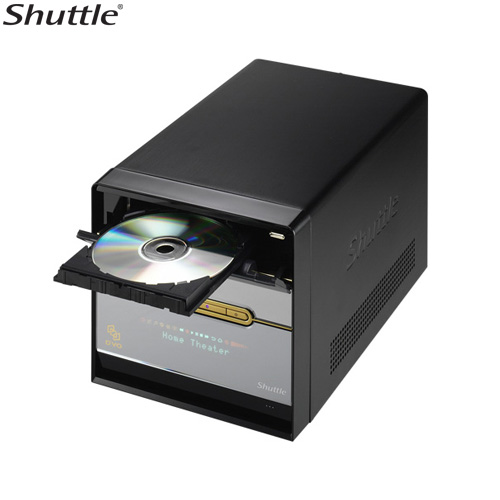
testI was shopping around IOI Mall today when I came across a computer shop selling the Shuttle SG33G5M (D’VO) small form factor bare-bones PC. Shuttle has always been a market leader in the realm of custom designed PCs. The D’VO is their foray into the realm of home entertainment PCs.

At first glance, there are several disadvantages to using the system: (1) It comes with an Intel G33 chip-set with a GMA 3100 graphics processor, which is just varely capable of playing 1080p high-definition video. (2) It does not come with anything other than the casing, power supply and motherboard for RM1380 (£260).

However, its disadvantages are also an advantage. It is fully customisable and expandable. The procesor, RAM, drives are all up to the user. There is also an extra PCI and PCI/E slot in the device. So, it is possible to upgrade the machine as we move from playing DVDs to Blue-Ray films.

The PCI/E slot can be used to upgrade the graphics capabilities with an NVIDIA/ATI card. The PCI slot can be used to expand the capabilities with a TV tuner and video capture card. The processor and RAM can be upgraded when needed. The optical drive can be upgraded from a DVD drive to a Blue-Ray one in the future.

In addition, it also comes with a superb water cooling system with a magnetically levitated fan. This makes the machine extremely quiet. It also comes with a MCE2 remote control and a front LCD panel like some HTS systems.

The only catch is the price. However, I did not try to bargain for the price. It may be possible to drive the price down by quite a bit. It is possible to buy one under $300 (RM1100) on-line. It would make a fairly compelling product at that price.

Its main advantage against the ASUS PX24 is the expandability. It’s main disadvantage is the looks, size and weight of the machine.

PS: With this machine, it would be possible to kill two birds with one stone. It can also double as a NAS machine.